Dreaming about waking up near the ocean? Buying a condo in Satellite Beach can give you that low-maintenance coastal lifestyle, but it also comes with questions that are easy to overlook. If you want to understand how condos here differ, what to review before you buy, and how to spot a building that fits your plans, this guide will help you move forward with more clarity and confidence. Let’s dive in.
Why Satellite Beach Condos Stand Out
Satellite Beach sits on a barrier island between the Atlantic Ocean and the Banana River, and that setting shapes condo ownership in a very real way. The city has about 3 square miles of land, and local resilience planning identifies exposure to high winds, storm surge, intense rainfall, coastal erosion, and chronic flooding and erosion hazards.
For you as a buyer, that means the building itself matters just as much as the unit. A beautiful interior is great, but long-term value also depends on how the association plans for maintenance, inspections, and repairs in a coastal environment.
The beach lifestyle is a major draw here. Satellite Beach says about 40% of its Atlantic beachfront is publicly owned, and the city maintains 17 beach crossovers plus three beach parks with parking, restrooms, showers, and covered picnic tables.
That is helpful to keep in mind when comparing communities. Private beach access can be a great amenity, but it is not the only way to enjoy the shoreline in Satellite Beach.
What Condo Options Look Like
One of the biggest mistakes buyers make is assuming every Satellite Beach condo offers the same experience. In reality, the local inventory includes a wide mix of building ages, layouts, and amenity packages.
Representative examples show oceanfront buildings from the 1970s, early-2000s communities, mid-2000s luxury buildings, and at least one development from 2019. That means your search may include everything from simpler older units to newer buildings with more modern design and shared features.
Older coastal buildings may offer more basic common areas and more straightforward floor plans. Newer or renovated communities are more likely to advertise features like secure entry, larger terraces, private elevator access, and garage-oriented parking.
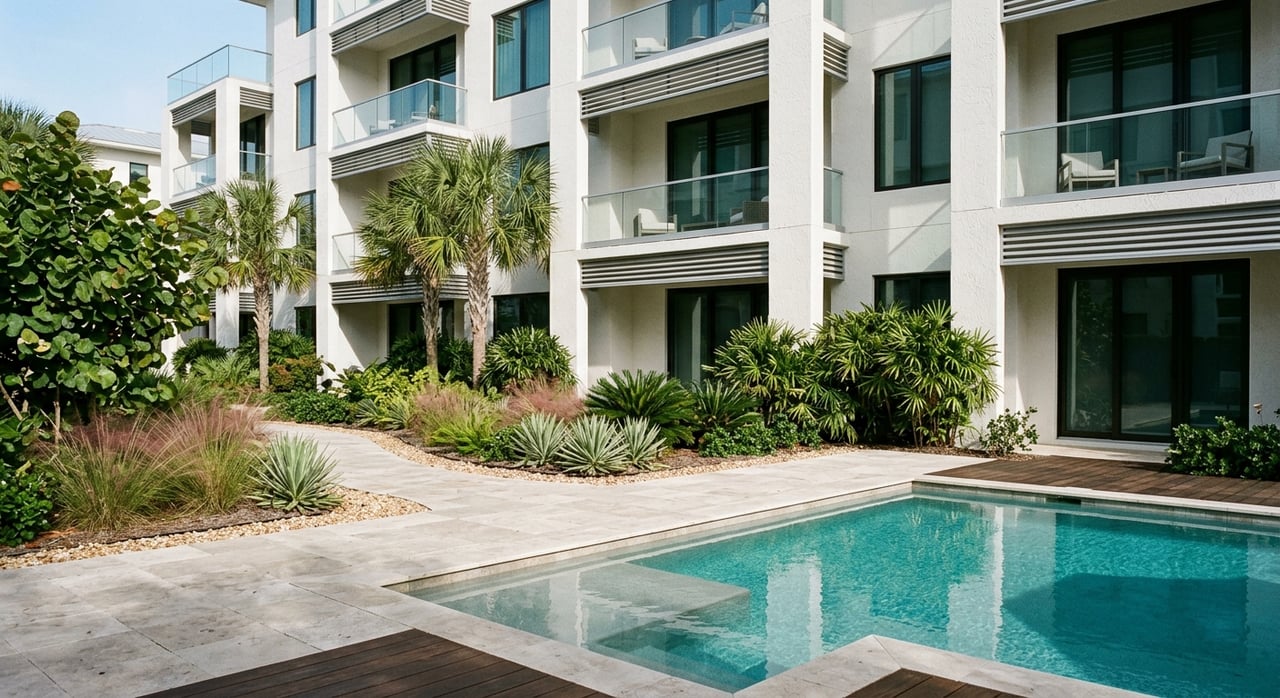
Across the board, the common thread tends to be beach access and shared amenities rather than large private outdoor space. Depending on the community, you may see amenities like heated pools, club rooms, saunas, tennis courts, storage areas, garage parking, hot tubs, and private beach access.
How Condo Ownership Works in Florida
Buying a condo is different from buying a single-family home. You are not just buying the unit itself. You are also buying into a shared system of maintenance, budgeting, and building governance.
Under Florida law, the association is responsible for maintaining the common elements, except for limited common elements that the declaration assigns to a unit owner. Associations also have the power to collect assessments and can access units when needed for maintenance, repair, replacement, or to prevent damage.
In practical terms, this can reduce the amount of exterior upkeep you handle on your own. At the same time, it means your ownership experience depends heavily on how well the association manages the property.
That is why a condo purchase should never be based on finishes and views alone. The real story is in the documents, budget, inspection history, and reserve planning.
Why Financial Health Matters So Much
In Satellite Beach, association finances deserve close attention. Florida’s current condo framework places major importance on reserve funding, especially for buildings that are required to complete a structural integrity reserve study.
For those associations, reserve funding for the structural items identified in that study cannot be waived or reduced. State guidance also warns that waiving reserves can lead to unexpected special assessments.
That matters because a lower monthly fee does not always mean a better value. In some cases, it can signal that important costs are being pushed into the future.
When you compare condos, look beyond the monthly dues. You want to understand whether the association appears prepared for ongoing building needs or whether owners may be facing added costs later.
What to Review Before You Make an Offer
A condo purchase in Florida comes with important due diligence, and the association records are a key part of that process. Official records include items like the declaration, bylaws, rules, budgets, financial records, and meeting minutes.
If the association manages 25 or more units, it must maintain a website or mobile app with specified records. Those records include documents such as the declaration, bylaws, rules, annual budget, annual financial report, meeting notices and agendas, meeting minutes, inspection reports, and the latest structural integrity reserve study.
As a buyer, you should treat these materials as essential, not optional. They help you understand not just what you are buying today, but what ownership may feel like over the next several years.
Key Condo Documents to Request
Before you move forward, ask for the condo package and review it carefully. Focus on the documents that affect your daily use of the property and your future costs.
Important questions include:
- What do the declaration, bylaws, and rules say about rentals, pets, parking, storage, renovations, and approval requirements?
- What is the current budget, and what type of annual financial report is the association required to prepare?
- Are there reserve shortfalls, special assessments, or planned assessments?
- What do the latest milestone inspection summary and structural integrity reserve study say?
- Who maintains any limited common elements, and does the declaration shift any of that responsibility to the unit owner?
Why Meeting Minutes Matter
Meeting minutes can reveal issues that are not obvious from a listing sheet. They may show discussion about repairs, maintenance concerns, project timing, or budget pressure.
This does not mean every issue is a red flag. It means you should look for patterns and understand how the association responds when problems come up.
Coastal Buildings Need Extra Scrutiny
Because Satellite Beach is a coastal market, building age should prompt questions, not automatic assumptions. An older building is not necessarily a bad purchase, and a newer building is not automatically the better fit.
The more useful comparison is whether the building’s maintenance history, reserve planning, and documents align with your time horizon and comfort level. A well-maintained older condo can make excellent sense if the association has stayed on top of the property.
Florida law now requires milestone inspections for condominium and cooperative buildings that are three habitable stories or higher. The default trigger is when the building reaches 30 years of age, but local enforcement can require the first inspection at 25 years when conditions such as proximity to salt water justify it.
A milestone inspection begins with a visual structural review. A second phase is required only if the first phase finds signs of substantial structural deterioration.
Understand Reserve Studies Before You Buy
Florida also requires a structural integrity reserve study for residential condominium buildings that are three habitable stories or higher, completed at least every 10 years. These studies cover major items tied to structural safety and long-term maintenance.
That includes the roof, structural members, fire protection, plumbing, electrical systems, waterproofing and exterior painting, windows and exterior doors, plus other high-cost deferred maintenance items related to structural safety.
For you, this is one of the most important parts of condo due diligence. It helps answer whether the association is planning realistically for major building needs.
Smart Questions to Ask About the Building
As you compare properties in Satellite Beach, keep these questions front and center:
- When was the building’s certificate of occupancy issued?
- Has the building had a milestone inspection, and were repairs recommended?
- Is there a current structural integrity reserve study?
- What do the rules say about pets, rentals, parking, and renovations?
- How does the building’s amenity package compare with your actual lifestyle?
- Does the association’s financial picture support your long-term plans?
Matching the Condo to Your Lifestyle
The right condo is not just the one that looks best online. It is the one that fits how you want to live.
If you are a first-time buyer, the appeal may be a lower-maintenance ownership model paired with beach proximity. In that case, it helps to look closely at monthly costs, parking, storage, and the rules that may affect your day-to-day use.
If you are downsizing, practical details can matter even more. Elevator access, parking convenience, storage, balcony condition, and the building’s long-term maintenance planning can all shape how comfortable the home feels over time.
If you are relocating from outside the area, remember that Satellite Beach offers both building-specific amenities and strong public beach access throughout the city. That can give you more flexibility as you compare properties.
A Calm, Strategic Approach Wins
Buying a condo in Satellite Beach should feel exciting, but it should also feel informed. The goal is not just to find a unit you love. The goal is to choose a building, association, and ownership setup that support your budget, lifestyle, and long-term peace of mind.
With so many differences in age, amenities, and association planning from one community to the next, thoughtful guidance matters. If you want a clear, local perspective as you compare condo options in Satellite Beach, Michelle Mariacher can help you evaluate the details and move forward with confidence.
FAQs
What makes buying a condo in Satellite Beach different from buying a house?
- Buying a condo means you are purchasing both your unit and a shared ownership interest in common elements managed by the association, so the building’s rules, budget, reserves, and maintenance planning are major parts of the decision.
What condo documents should buyers review in Satellite Beach?
- You should review the declaration, bylaws, rules, current budget, financial records, meeting minutes, inspection reports, and the latest structural integrity reserve study when available.
Why do reserve funds matter when buying a Satellite Beach condo?
- Reserve funds help cover major future repairs and replacement costs, and weak reserves can increase the risk of special assessments or added financial pressure on owners.
Are older condo buildings in Satellite Beach always a bad choice?
- No. Older buildings can still be solid purchases if they have been maintained properly and the association’s financial and repair planning are in good shape.
What are milestone inspections for Florida condo buildings?
- Milestone inspections are required for condominium and cooperative buildings that are three habitable stories or higher, with timing based on building age and sometimes earlier in saltwater areas.
Do you need private beach access to enjoy Satellite Beach?
- No. Private beach access can be a valuable amenity, but Satellite Beach also has a substantial public beach access network with crossovers and beach parks.